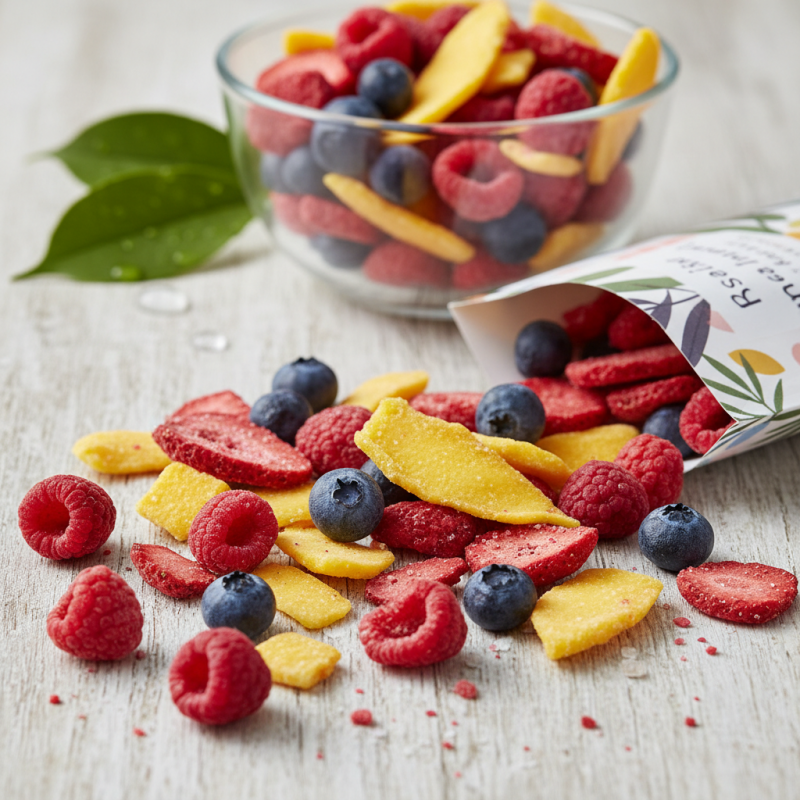
What is Freeze Dried Fruits and How Are They Made?
Freeze Dried Fruits have gained popularity among health-conscious consumers. These fruits retain their essential nutrients while achieving a lightweight and crispy texture. The process involves removing moisture through sublimation. This technique preserves the flavor and color, making the fruits appealing.
When producing Freeze Dried Fruits, quality is essential. The fruits are carefully selected, washed, and sliced. Each step impacts the final product. However, sometimes manufacturers rush through these stages. This may lead to inconsistencies in taste and texture.
The result is a convenient snack option. Freeze Dried Fruits can be enjoyed in various dishes or on their own. They provide a healthy alternative to sugary snacks. Yet, it’s important to reflect on the impact of nutrition during this process. While delicious, it is easy to overlook the potential loss of some vitamins.
What Are Freeze Dried Fruits?
Freeze dried fruits are a unique way to enjoy the natural flavors of fruits. They retain most of the nutrients while offering a convenient option for snacking. The process involves removing moisture from fresh fruits through sublimation. This happens at low temperatures, which helps in preserving taste and color.
According to industry reports, the global freeze-dried fruit market was valued at approximately $1.5 billion in 2020 and is expected to grow significantly. Many consumers gravitate toward these products for their long shelf life and ease of use in recipes. Freeze dried fruits contain about 90-95% less water than their fresh counterparts, making them lightweight and packable. This makes them a popular choice for hikers and travelers.
However, the freeze-drying process isn't perfect. It can lead to changes in texture, making some fruits less appealing for direct consumption. Additionally, consumers should be aware of potential added sugars in some freeze-dried products, which can negate health benefits. Seeking out minimally processed options is vital for maintaining the integrity of the fruits. The balance between convenience and quality is still a topic of discussion among food enthusiasts.
The Benefits of Freeze Dried Fruits
Freeze-dried fruits are gaining popularity for their nutritional benefits. According to the USDA, these fruits retain about 90% of their vitamins and minerals. This preservation method allows for a longer shelf life without the need for refrigeration. The process involves removing moisture while maintaining flavor and texture.
One notable advantage of freeze-dried fruits is their lightweight nature. This makes them ideal for outdoor activities and emergency food supplies. They are easy to transport and add convenience to meals. However, consumers should be aware that some products might contain added sugars or preservatives. Reading labels is crucial.
Moreover, the taste of freeze-dried fruits often surprises many. They can be crunchy and flavorful, making them great snacks. Yet, they can be less juicy than fresh ones. Finding the right balance in flavor can sometimes be a challenge. Despite this, the convenience and nutrition of freeze-dried fruits hold significant appeal for many health-conscious individuals.
The Freeze Drying Process Explained
Freeze-drying is a fascinating process that preserves fruits while maintaining their nutrients and flavor. It starts with fresh fruits that are carefully harvested. The fruits are then washed and cut into pieces. This is where the magic begins. They are frozen at very low temperatures, usually below -40°F.
Once the fruits are frozen, a vacuum is created around them. This lowers the pressure, allowing ice to convert directly into vapor. This process is called sublimation. The moisture is removed without cooking the fruit, retaining its shape and color. The final product is lightweight and crunchy. It can easily be rehydrated with water.
Though freeze-drying effectively locks in nutrients, it's not perfect. Some vitamins can still be lost during the process. Additionally, the texture can change, making them different from fresh fruits. It's essential to evaluate if this method suits your needs or preferences. The balance between preservation and taste can sometimes leave you wanting more.
What is Freeze Dried Fruits and How Are They Made?
| Fruit Type | Nutritional Benefits | Freeze Drying Process Steps | Common Uses |
| Strawberries | High in Vitamin C, antioxidants | 1. Washing and slicing 2. Freezing 3. Vacuum application 4. Sublimation | Snacks, cereals, baking |
| Bananas | Rich in potassium, fiber | 1. Peeling and slicing 2. Freezing 3. Vacuum application 4. Sublimation | Smoothies, oatmeal, trail mix |
| Mangoes | High in vitamins A and C, folate | 1. Washing and cutting 2. Freezing 3. Vacuum application 4. Sublimation | Desserts, salads, snacks |
| Blueberries | Antioxidants, vitamin K | 1. Washing 2. Freezing 3. Vacuum application 4. Sublimation | Baking, smoothies, snacks |
Nutritional Comparison: Freeze Dried vs. Fresh Fruits
When comparing freeze-dried fruits to fresh fruits, one must consider their nutritional values. Freeze-drying removes moisture while retaining most nutrients. This process preserves vitamins like C and A. However, certain heat-sensitive compounds may degrade slightly. Fresh fruits, on the other hand, are loaded with water and nutrients but can spoil quickly. Their flavor and texture often feel more vibrant and appealing.
Energy content is another factor. Freeze-dried fruits are often more calorie-dense because water is absent. A handful can offer the same energy as a larger serving of fresh ones. Yet, the larger serving provides hydration. This could lead to unintentional overeating or a lack of water intake if one relies solely on freeze-dried snacks.
Taste and texture vary. Freeze-dried fruits may taste more intense. But they can also be chewy and less juicy than fresh options. Some may miss the crunch of a fresh apple or the burst of a ripe berry. It’s vital to acknowledge personal preferences. It’s okay to enjoy both forms, but questioning habits can lead to a balanced diet.
Nutritional Comparison: Freeze Dried vs. Fresh Fruits
Popular Freeze Dried Fruits and Their Uses
Freeze-dried fruits have gained popularity for their convenience and flavor. Common options include strawberries, apples, and bananas. These fruits are not only tasty but also easy to store. They retain most of their nutrients, which makes them an excellent snack choice. You can find them in supermarkets, often near other dried fruits.
These fruits serve various purposes. You can use them in smoothies or add them to breakfast cereals. They are also perfect for trail mixes. For those who enjoy baking, freeze-dried fruits can enhance the flavors in muffins and cakes. Their crunchy texture adds an exciting element to your dishes. You might also consider using them as toppings for yogurt or ice cream.
Although freeze-dried fruits are versatile, they can sometimes lack the freshness of regular fruits. Some people miss the juiciness. They might also be more expensive than fresh options, which is something to think about. It's essential to choose the right applications for these fruits. Experimenting with different recipes can help discover their best uses.